
Dog Photo Guide: Which Photo Works Best
The photo you upload is what becomes the finished product, so a clear, well-lit photo makes the biggest difference in how the result looks.

Dog Photo Guide: What Makes a Good Photo
- Good, even lighting — natural daylight works best, avoid harsh shadows or backlighting.
- Sharp focus — the dog’s face and fur detail should be clearly visible, not blurry.
- Full head visible — ears, top of the head and chin all in frame, nothing cropped off.
- The dog facing the camera, or at an angle where the face reads clearly.
- The largest resolution photo you have — avoid heavily compressed or resized-down images.
- One dog in the frame per selection, unless the product’s multi-dog option is used.
- You should own the photo, or have permission to use it.
What to avoid
- Dark, backlit or blurry photos.
- The dog partly out of frame or blocked by another person, object or another dog.
- Screenshots or heavily filtered images, which lose detail needed for printing.
Real examples
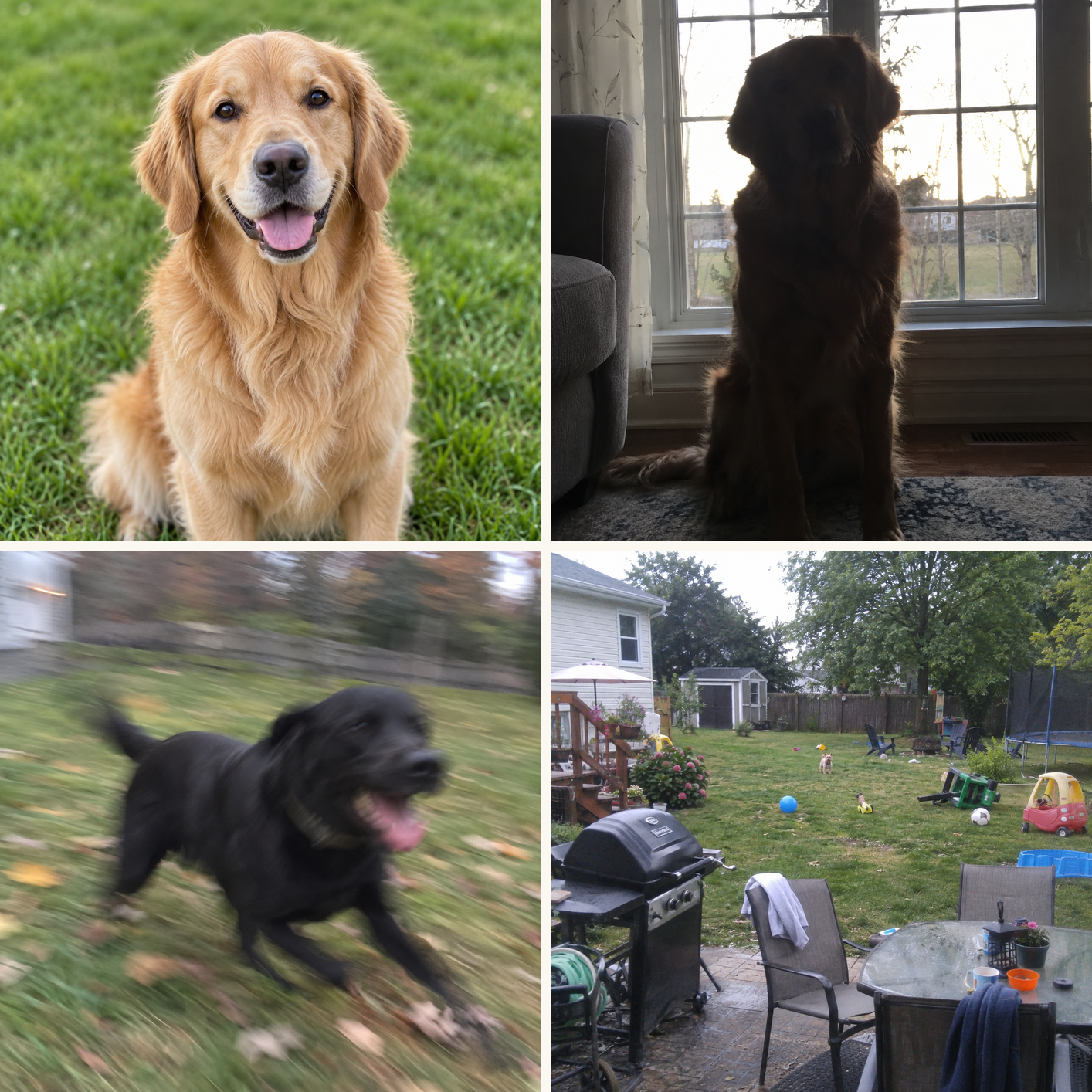
Photo questions
Can I use a phone photo?
Yes — a clear, well-lit phone photo at full resolution works well.
What if my dog is looking away from the camera?
A three-quarter angle where the face is still clearly visible can work; a photo taken directly from behind generally will not.
Can I upload more than one photo?
Some products support more than one dog; upload one clear photo per dog you want included.
What file types can I upload?
Common photo formats such as JPG, PNG, HEIC and WEBP.
See the full process in How It Works.