
Dog Portraits
Modern Pet Portraits: Which Style Suits Your Dog, Photo and Room
Sep
Your dog is bold and bright, so why hang a portrait that is neither?
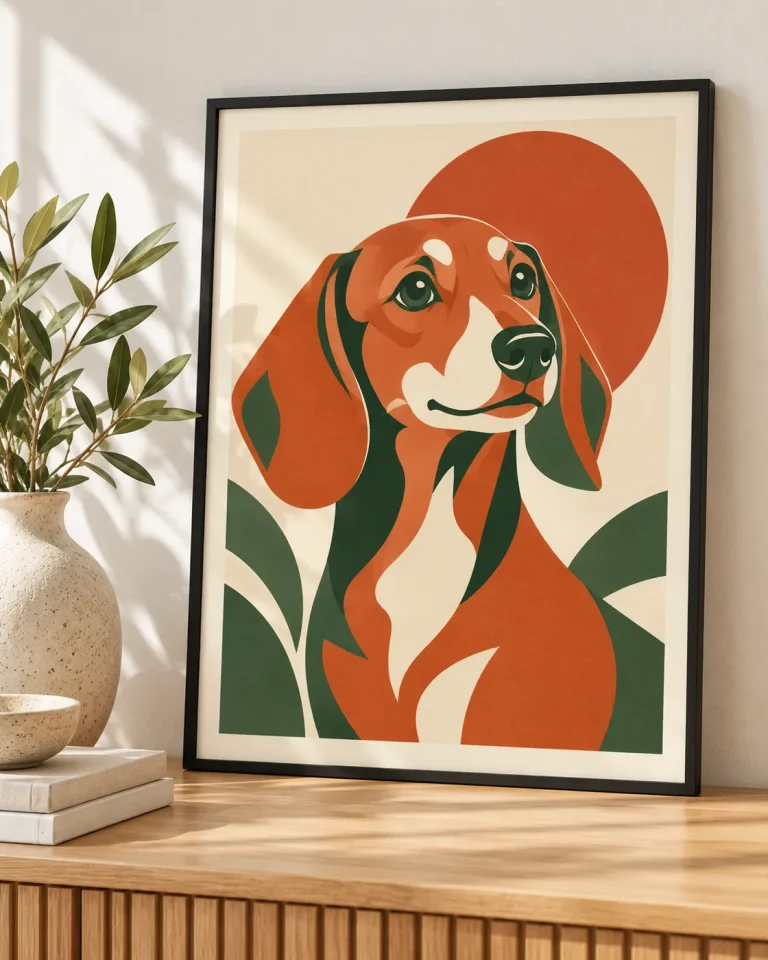
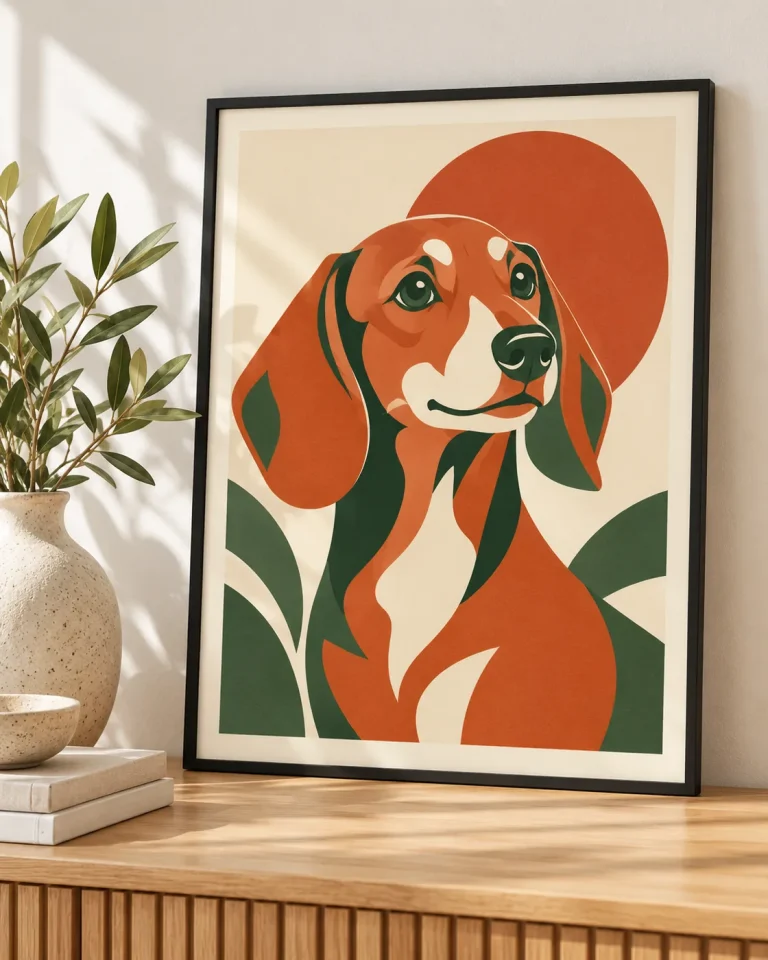
Modern pet portraits swap the fur-by-fur realism of a traditional oil portrait for bold color, simplified shapes and open space. The common looks are colorful pop art, watercolor, abstract, line art and the minimal photo print, and each needs a different kind of photo, so choose the picture first and the style second.
Know which look suits your dog? Upload the photo on a custom dog portrait page, and MyDogPics checks it before anything is printed. Free US shipping on every order, and your 2nd item is 25% off in the cart, automatically.
What makes modern pet portraits modern?
A traditional pet portrait tries to look like a painting of the real animal, down to each highlight in the coat. Modern pet portraits keep the likeness but change the language: flat or saturated color, simplified shapes, lots of empty space and often a name set in clean type. The finished piece reads more like a design print than an heirloom oil.
Most of these looks borrow from 20th-century art. Pop art brought commercial graphics into the gallery, abstraction reduced subjects to shape and color, and line drawing stripped a subject down to its contour. A modern dog portrait uses the same moves on one particular dog, which is why it can look striking on a wall and still be recognizably yours.
Because every modern style simplifies, each one decides what your photo must get right. Pop art depends on a clean outline, watercolor on good light, abstract work on clear markings, and a minimal photo print on your sharpest file.
Five modern styles and what each does to your dog’s face
Colorful pop art
Pop art dog portraits use flat, saturated blocks of color, heavy outlines and sometimes the same face repeated in a grid, each copy in a different palette. The look comes from pop art, a movement that Tate describes as emerging in Britain and America in the 1950s and drawing on advertising, product packaging and comic books.
Colorful pet portraits in this style flatten the shadows, so what survives is the outline and the expression. They suit bright rooms, playrooms and anyone who already lives with bold color.
Watercolor
Custom watercolor pet portraits aim for soft edges, see-through washes and pale paper glowing between them. Tate explains why the look glows: watercolor is semi-transparent, so the white of the paper gives the washes their luminosity, and white areas are often simply left unpainted.
Some watercolor portraits are painted with real watercolor on paper, and many are digital illustrations that imitate it and are then printed. Both can be beautiful, but they are different objects, so ask which one a listing is selling.
Abstract
Abstract pet portraits reduce the dog to shapes, blocks of color and a few gestural marks. Tate’s definition of abstract art covers exactly this case: art based on a real object or figure whose forms have been simplified.
The further a piece moves from realism, the more it relies on the features that make your dog unmistakable, such as the set of the ears, a patch over one eye or a white blaze. Some abstract work is recognizable only to the owner, which can be the charm or the problem.
Line art
Line art draws the dog as a contour, sometimes in one continuous stroke, on a plain background. It is the quietest of the modern styles and one of the most forgiving, because it needs a readable silhouette rather than perfect focus.
It works at small sizes: a hallway, a desk, a bedside table. A name or a date set underneath suits the style without cluttering it.
Minimal photo print
The minimal print is the photo itself, cleaned up or cut out and set on a flat color or a white mat with generous space and a name in simple type, like the border collie above. Nothing is reinterpreted, so it is the least forgiving modern style for blur, grain or odd color.
The photo each style needs
Each style forgives different faults in a photo, and none can add detail the camera never caught. Match the picture you already have to a style that can make the most of it.
| Style | What it keeps from the photo | Photo that works | Photo to avoid |
|---|---|---|---|
| Colorful pop art | Outline and expression | Even light, a plain background, a bright catchlight in each eye | A dark dog in a dim room, where the eyes sink into the fur |
| Watercolor | Soft color and light | Soft daylight and true coat color; slight softness is fine | Orange lamplight, heavy filters, deep shadow across the face |
| Abstract | Shapes, markings and color | A clear view of the ears and markings; focus matters less | A pose that hides the patch or blaze that makes your dog recognizable |
| Line art | The silhouette | A side or three-quarter view against a background of a different tone | Fur that blends into the background, like a black dog on a black sofa |
| Minimal photo print | Everything, because it is the photo | Your sharpest, largest original file | Screenshots, chat-app copies and tight crops of a distant dog |
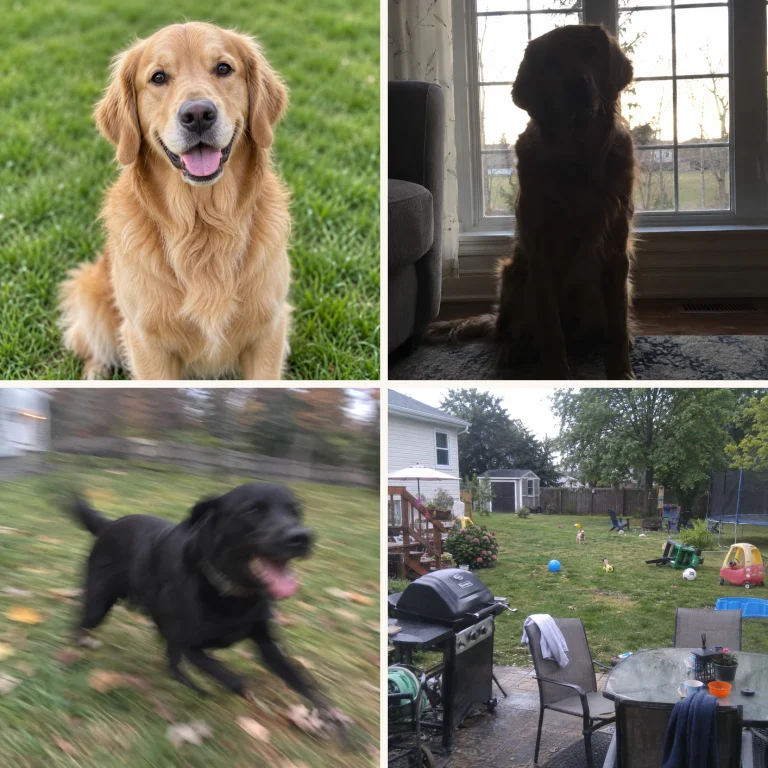
Two points apply to every style. Nikon’s guide to pet portraits centers on sharp eyes and says that directing as much light as you can into them adds catchlights, the sparkle that makes an expression look alive; it also warns that the eyes of black-coated pets can be hard to see because they are much the same color as the fur.
So photograph a dark dog facing a bright window and check the eyes before anything else. Our photo guide sets good and weak photos side by side, and the guide to portraits from photos covers the pixel counts that large prints need.
Choosing a style for the room it will hang in
Start with the wall, not the dog. Colorful dog portraits hold their own in a bright living room or a kid’s bedroom, while a soft watercolor or a line drawing suits a calm bedroom, a hallway or a neutral space.
- Pull one color from the room. A pop art background that echoes a rug or a cushion ties the piece in; a clashing one looks borrowed from another house.
- Think about viewing distance. Bold, flat styles read from across a room. Fine lines and pale washes need to be seen up close, so they belong in corridors, beside a desk or over a nightstand.
- Size it to the furniture. One small print floats above a long sofa; a larger piece, or a row of three, fills the space.
- Build a series. The same dog in three pop art palettes, or two dogs drawn in matching line art, reads as one design rather than scattered frames.
- Match the frame to the style. Thin black, white or plain wood frames suit modern work; ornate gold frames suit traditional oils better.
If the portrait joins a wall of other art, follow that art’s palette or its level of detail. A single loud piece among quiet ones pulls every eye toward it, which is sometimes exactly what you want.
Picking a modern style as a gift
For a gift, the recipient’s taste matters more than yours. Look at what they already hang, wear and use: a person with white walls and little clutter will likely prefer line art or a minimal print, and someone with a bright kitchen will enjoy pop art.
- A dog who joined the family recently. Line art needs only a clear outline, so one sharp phone photo is enough, even for a puppy that will not sit still for long.
- A dog who has died. Watercolor is a gentle choice because it forgives an older or softer photo; our memorial portrait guide helps with choosing among the pictures that exist.
- Two dogs, or a dog and a cat. Flat color hides small differences in light between photos taken on different days; the two dog portraits guide covers layouts.
- Someone who does not collect wall art. The same close-up can become dog face pajamas, with the face cut out of the photo and printed all over the fabric.
Whatever you choose, ask for the original photo file rather than a screenshot, and leave time before the date: portraits are made to order after checkout, and current production and delivery times are on the shipping page. Changes are possible by email within 12 hours of ordering, before the order goes to print.
Who modern portraits are for: gift ideas for every dog person
A modern portrait is a gift for a person, and a colorful dog portrait makes a thoughtful gift for a dog lover when the style suits their walls. Each card below names one buyer, the snag they hit and the style that answers it.
Dog moms
Dog mom wall art is usually a slogan print, so it feels generic beside her real dog. A pop art or watercolor portrait keeps her dog’s outline and expression, and the photo guide shows which of her pictures will carry it.
Dog dads
A dog dad rarely wants fussy art, and another mug is a forgettable gift. Line art or a minimal print is quiet enough for the den or the garage wall, and it needs only a clean silhouette or his sharpest photo.
Gift buyers for a dog lover
A dog lover who has everything probably owns art already, so check the palette on their wall before you pick. A pop art piece pulls the eye in a room of quiet pictures, which is a risk when you are unsure of their taste.
Kids and parents
Kids notice color first, and parents worry that pale art will vanish in a busy room. Bold, flat styles read from across the room, so a colorful dog portrait suits a kid’s bedroom.
Matching families
Family photos on one wall tend to look mismatched, and the dog is often missing from them. A modern portrait in flat color takes the dog’s spot, and a row of three in one palette ties the frames together.
Couples
A couple’s anniversary art tends to feel the same every year. Pull the palette from your living room, put the dog you share in the middle, and the piece belongs to the two of you.
Grandparents
Grandparents who live far away miss the grand-dog, and the photos on their phone never get printed. Line art works at small sizes, so a hallway or a bedside table can hold a simple outline of the grand-dog.
New puppy owners
A new puppy grows up fast, and early photos are rarely perfectly sharp. Pop art keeps the outline and the expression, which means a bright catchlight in each eye matters more than perfect fur detail.
Christmas and birthday gift buyers
A last-minute birthday or Christmas gift is where portraits go wrong, because the photo gets picked in a hurry. Settle the style from the best photo you already have, then order early; portraits are made to order and the shipping page lists current times.
Grieving dog owners
Grief makes some people want a quiet piece and others want their dog’s bright colors back. Pale washes or soft line art suit a shelf, there is no deadline, and the memorial portrait guide covers finding the originals.
Homes with two dogs
With two dogs, one is always left out of the wall, and the pair never pose together. A simplified style can sit two separate photos side by side, and each dog needs its own sharp picture at its own eye level.
Self-purchasers
Spending on a portrait for yourself can feel indulgent, and choosing among five styles is its own struggle. Treat yourself and start with the photo: the sharpest one tells you which style to pick, just because it is your dog.
What to ask before you order a modern portrait
Modern styles are sold under loose labels, so one word can describe very different pieces. These questions are specific to the looks above; the portrait buying guide covers pricing, formats and copyright in general.
- Watercolor: is it real watercolor on paper, or a digital illustration with a watercolor effect that is then printed?
- Pop art: who chooses the colors, and can the palette be matched to a room? If it is a grid, how many color versions does it include?
- Abstract: can I see finished pieces next to their source photos, to judge how recognizable the dog stays?
- Line art: is it one continuous line or an outline with inner details, and can a name be added in the same style?
- Any style: what exactly arrives, at what size and on what material? Each MyDogPics product page lists its size, material and options.
- Any style: what happens if my photo is not good enough? MyDogPics checks each photo first and emails you for another if it is too small, dark or blurry to print well.
- Painted or digital: the method changes the wait and the price, and our painted versus digital comparison shows how to read a listing’s wording.
At MyDogPics there is no proof or approval step. We check the photo and prepare the artwork instead, then print after you order and ship to a US address with USPS tracking; how it works shows the full sequence.
Custom dog portraits to start from
Open a portrait below to read its size, material and options, then upload your dog’s photo on that page. We check every photo before anything is printed.
Would you rather wear your dog’s face than frame it? The same close-up can become dog face pajamas or another custom gift.
Modern pet portrait questions
What is a modern pet portrait?
It is a portrait of your pet in a contemporary graphic style rather than a realistic painted one: flat or bold color, simplified shapes, clean lines and open space. Pop art, watercolor, abstract, line art and minimal photo prints are the most common versions.
Which modern style works best with a slightly blurry photo?
Line art and abstract styles forgive softness best, because they rely on outline and shape rather than fine detail. Watercolor forgives a little softness but not darkness, and a minimal photo print forgives nothing, so keep that one for your sharpest file.
Do pop art portraits work for black dogs?
Yes, when the photo shows the eyes. A black dog photographed in dim light becomes a flat shape, and bold flat color makes that worse; turn the dog toward a window so each eye catches the light before you take the picture.
How do I choose colors for a pop art dog portrait?
Pick one color from the room and one that contrasts with your dog’s coat. A golden dog stands out against teal or navy, a black dog against yellow, orange or pink, and a white dog against a deep, saturated color rather than a pastel.
What size should a modern portrait be?
Let the wall and the style decide. Bold, graphic styles work large and read from across a room, while line art and pale watercolor look best smaller and closer; each MyDogPics product page lists its size, material and options.
Can two dogs share one modern portrait?
Yes, and simplified styles make it easier, because flat color hides small differences in light between two photos. Send one sharp photo per dog, taken at each dog’s eye level, and check the product page to see whether a design takes more than one pet.
Is a modern pet portrait a good gift for a dog lover?
Yes, when the style fits the recipient’s walls and the portrait shows their own dog. Line art and a minimal print suit quiet rooms, while pop art suits bright ones, because the style decides how loud the piece looks. Ask the family for one sharp original photo.
Is there a proof before my portrait is printed?
No. MyDogPics skips proofs and previews and checks every photo while preparing the artwork instead. If a photo is too small, dark or blurry to print well, we email you for another one before anything is printed, and the finished order ships with USPS tracking.
Ready to pick the photo and the style? Upload the original file on a portrait page and we check it before anything prints. There is free US shipping on every order, 25% off your 2nd item when you buy two, and 30 days to have it remade or refunded if it arrives with a print defect, damaged or wrong.
Sources
- Tate — Art term: Pop art
- Tate — Art term: Abstract art
- Tate — Art term: Watercolour
- Nikon — Animal-Detection AF: Focusing on the Eyes of Dogs and Cats for Winning Pet Portraits
Related guides: Comparing portrait sellers · Choosing the photo · Two dogs in one portrait · All dog portrait guides
Last reviewed: September 25, 2026
