Dog Portraits
Dog Paintings From Photos: How a Snapshot Becomes a Portrait
Sep
Your phone is full of dog photos. Which one should become the portrait?
Dog paintings from photos are only as good as the reference: the painter copies the eyes, fur direction and markings your picture shows and has to invent whatever it hides. Send the sharpest original file, taken at your dog’s eye level in soft daylight, add a few extra photos for true color, and expect an interpretation rather than a copy.
Once you have a sharp photo of your dog, MyDogPics can turn it into a custom dog portrait. Free US shipping on every order, and your 2nd item is 25% off in the cart, automatically.
How dog paintings from photos are made, step by step
Whether the artist works in oil, watercolor or on a tablet, most paintings of dogs from photos pass through the same five stages. Knowing them tells you which of your decisions matter, and when.
- Choosing the reference. The artist picks the main photo, often with your help, and notes what it cannot show: the true coat color, the markings on the far side, the ear that happened to be folded that day.
- Cropping and composing. Head and shoulders or full body, which way the dog faces, whether the collar stays, what the background becomes. Leashes, hands and clutter usually disappear at this stage.
- Transferring the drawing. Proportions are copied from the photo with a grid, a tracing or a digital layer. This is where likeness is won or lost: a muzzle drawn a little too long is enough to make the dog look like someone else’s.
- Blocking in and building up. Large areas of color go down first, then fur texture, then the details that carry the expression: the eyes, their catchlights, the wet edge of the nose.
- Finishing. Signature and any lettering, then drying and varnishing for paint, or printing for digital work. Oil paint needs far longer to cure than to paint; the painted versus digital comparison explains the timing.
Which photo makes the best painting
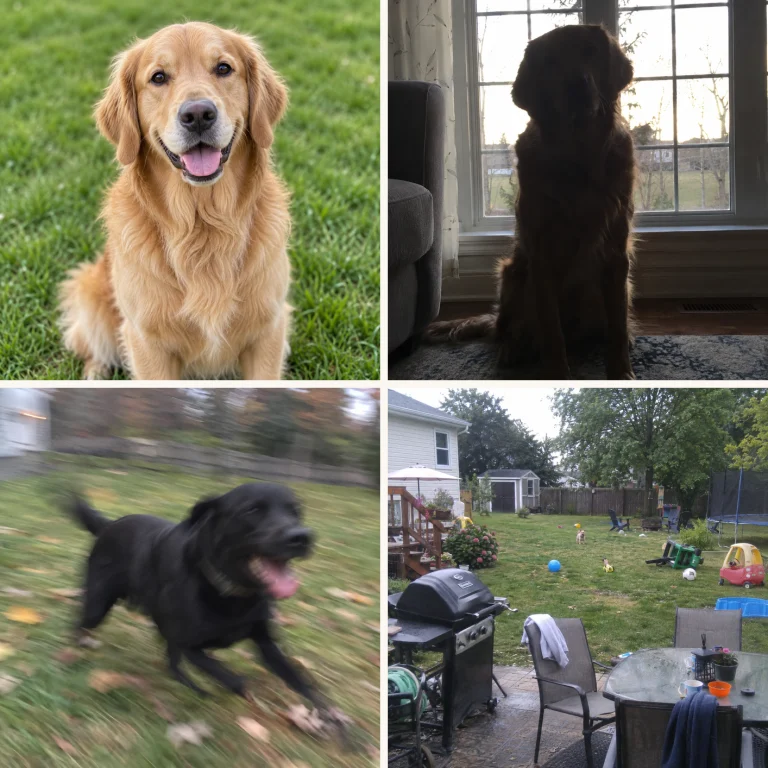
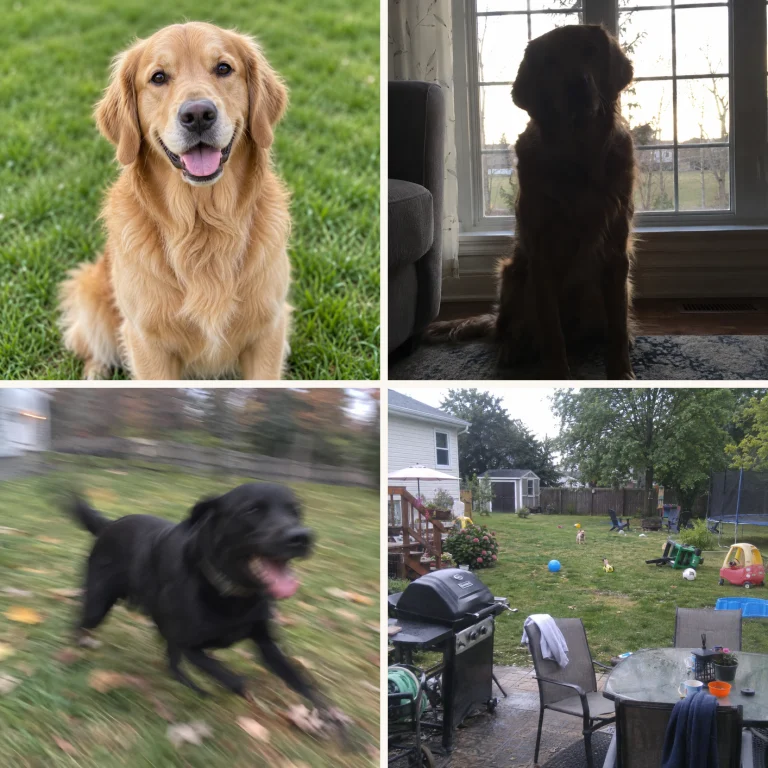
The photo that paints well is sharp at the eyes, taken at the dog’s eye level and lit by soft daylight. The American Kennel Club’s photography tips are blunt about the first two: shoot at eye level, which often means lying flat on the ground, and focus on the dog’s eye.
For light, the same article recommends shade or the golden hour, the first hour after sunrise and the hour before sunset, and a white foam board as a reflector to put life into the eyes. Skip the flash. The AKC’s guide for breeders says never to use one on puppies; on any dog, direct flash also flattens fur texture and can make the eyes glow.
Pick an everyday expression with the ears where they usually sit, and switch off filters and portrait-mode blur, which can smear the edges of fur. That same photo is the one to upload for a custom dog portrait from MyDogPics: we check every photo and email you for another before printing if it is too small, dark or blurry.
How many pixels a portrait photo needs
A painter working by eye needs enough detail to read individual clumps of fur and the shape of each pupil. A digital portrait that will be printed needs more: enough pixels for the final print size. The usual standard is 300 pixels per inch, the figure Canon’s photo printing guide uses in its table of pixel counts and paper sizes.
| Print size | Pixels needed | Full 12 MP photo, uncropped |
|---|---|---|
| 5 × 7 in | 1500 × 2100 | Yes, with plenty of room to crop |
| 8 × 10 in | 2400 × 3000 | Yes, with a little room to crop |
| 11 × 14 in | 3300 × 4200 | Close: about 270 pixels per inch |
| 16 × 20 in | 4800 × 6000 | No: under 200 pixels per inch |
The table assumes you use the whole frame, and Canon’s guide warns that cropping reduces the pixel count. A dog sitting across the yard may fill a quarter of the frame’s width; crop to the dog and a 4000-pixel-wide photo shrinks to about 1000 pixels, enough for a print roughly 3 inches wide at 300 pixels per inch.
That is why a close photo from an older phone often beats a distant one from an expensive camera. Many painters can still work from a file that would print poorly, because they read the detail rather than reproduce every pixel, but they cannot read detail the camera never captured.
Cropping matters just as much on fabric. On custom dog face pajamas, your dog’s face is cut out of the photo and repeated across the whole garment, so a close-up works better than a shot from across the room.
Old prints, screenshots and chat-app copies
If the best picture of your dog is a paper print, scan it rather than photographing it at an angle under a lamp. The Library of Congress guide to scanning your personal collections recommends 300 dpi for 4 × 6 and 5 × 7 in prints, and 400 or 600 dpi when you want to enlarge them to 8 × 10 in or more, saved as a high-quality JPEG if you plan to reprint. It also says to clean the scanner glass first; dust on the glass turns into specks on an enlargement.
Screenshots and photos saved from messaging apps or social media are often smaller and more compressed than the file on the phone that took them. Ask whoever took the picture to send the original by email or through a shared album, or export your own copy at full size. Compression shows up as blotchy blocks in dark fur, and a painter who cannot tell those blocks from real texture may paint them as texture.
What a painter can fix, and what no one can
Artists routinely remove leashes, hands, food bowls and yard clutter, replace a background, or move a tag that covers the chest markings. They can combine photos too: the head from a sharp close-up, the pose from a wider shot, the coat color from a third picture taken outdoors.
What no one can do is recover detail the camera never recorded. Motion blur hides the shape of the eyes, a backlit silhouette hides almost everything, and a dim indoor photo can turn a chocolate coat black. The fix is more photos, not more skill.
Send three to five extras that show true color in daylight, the markings from the side, and any feature you care about, such as a graying muzzle or the one ear that never stands up. The best pet portraits from photos come from a short written brief as much as from the main picture, so tell the artist what makes your dog look like your dog.
Photos someone else took: ask before you commission
A painting based on a photograph is a derivative work of that photo. The U.S. Copyright Office lists preparing derivative works among the exclusive rights of the copyright owner, and copyright initially belongs to the person who created the work, which for a photo means whoever took it.
For your own phone pictures, that is you. For a picture by a professional photographer, a groomer or a shelter volunteer, ask them before you commission a painting from it.
Many are happy to allow a private family portrait, and a one-line email saying so is worth keeping. Some artists ask you to confirm you have that permission when you order. The same goes for any photo you upload to MyDogPics: use one you took yourself or have permission to use.
What to expect when the painting arrives
A painting is an interpretation. Expect the artist to simplify the background, soften some fur and make the eyes and nose the sharpest part of the piece, because that is where everyone looks first.
Expect the colors to differ from your phone screen as well: a screen gives off light, while paint reflects the light in your room, so a warm evening lamp shifts a painting in a way a screen never shows. If an exact coat color matters, say so in the brief and mark which photo shows it truly.
None of this is specific to dogs. Paintings of pets from photos of cats, rabbits or horses raise the same questions about light, sharpness and color; only the anatomy changes.
To choose a style and seller, see how to compare custom pet portraits. For a pair of pets, read two dog portraits, and for a dog who has died, the memorial portrait guide.
Gift ideas for every dog person: who a portrait from a photo suits
A portrait made from a photo makes a gift for dog lovers because it shows one dog, theirs. Each card below names the buyer, the photo problem they tend to hit and what to do about it.
Dog moms
A dog mom’s favorite photo is often a blurry snapshot she cannot bear to drop. Send it for the expression, together with a sharper photo of the same dog for the details. We check every photo before anything is printed.
Dog dads
A dog dad is hard to shop for, and his photos of the dog are usually shot from standing height, with a small face in the frame. Crouch to the dog’s eye level, as the AKC advises, and the next snapshot can become a gift he keeps on display.
Gift buyers for a dog lover
A friend who loves dogs and already has everything will not re-gift a portrait of their own dog. Ask the family for the original file, not a screenshot, because screenshots are often smaller and more compressed than the original.
Kids and parents
Parents often send a child’s favorite dog photo as a chat screenshot, and that copy is smaller than the file on the phone. Ask whoever took the picture for the original, sent by email or a shared album.
Matching family
When a family wants a portrait of the same dog for every home, one copy can come from a worse photo, and the set doesn’t match. Pick one sharp original and use that single file for every order, so nobody is left out.
Couples
Couples who share a dog get tired of the same anniversary gift each year. Pick a photo from a day that matters to you both, but make sure the dog’s eyes are sharp, because the eyes carry the likeness.
Grandparents
Grandparents who live far away miss the grand-dog, and photos sent by chat arrive smaller than the original. Ask the family for the original files by email or a shared album, so the portrait starts from a sharp image.
New puppy owners
With a new puppy, the baby stage goes by fast, and a squirming subject is hard to catch sharp. Get down to eye level, use shade or the golden hour, and skip the flash; the AKC says never to use one on puppies.
Holiday and occasion gift buyers
A Christmas or birthday portrait is a last-minute worry when the only photo is a poor one. Sort the originals now and send the sharpest, because each piece is made to order after checkout; the shipping page has current times.
Grieving owners
After a dog has passed away, the photos you have are all there will be, and grief makes the search harder. Gather the originals from every phone and account first; our memorial portrait guide walks through it, and nothing has to be decided yet.
Multi-dog households
In a home with two dogs, one photo of both is often blurry because neither holds still. Take one close photo per dog, because multi-dog designs use one photo per dog. Our two dog portraits guide covers layouts.
Self-purchasers
Most people forget the best photo of their own dog on the phone for years. Treat yourself and pick it out now: a portrait for yourself needs no occasion, just because.
Custom dog portraits made from your photo
Each MyDogPics portrait below starts from the photo you upload, and its product page lists the size, material and options.
Painting from a photo: common questions
Can an artist paint my dog from a blurry photo?
They can paint from it, but not accurately. Blur erases the edges of the eyes and nose, which carry the likeness, so the painter has to guess. Send the blurry favorite for its pose and expression, plus any sharper photo of the same dog, even a less flattering one, for the details.
Do I need a professional photo for a dog painting?
No. A phone photo taken at your dog’s eye level in soft daylight, sharp at the eyes, is enough for most painters. A professional photo helps only when you have the photographer’s permission and the original file, not a small copy from a website or social feed.
Can a painting combine several photos of my dog?
Yes, and artists do it often: the pose from one photo, the face from a sharper close-up, the coat color from a daylight shot. Name each file by its job, such as face, pose or color, so nothing gets mixed up, and say which photo wins if two of them disagree.
Should the collar be in the painting?
Decide before the artist starts. A collar can hide chest markings and neck fur, so if you want it left out, send a photo without it or describe what sits underneath. If you want the tag or name plate readable, say so, because small details like tags are easily simplified.
What resolution does a photo need for a dog painting?
For a painter working by eye, enough to see fur clumps and the pupils clearly; most recent phone photos qualify when the dog fills much of the frame. For a printed digital portrait, aim for 300 pixels per inch at the final size, which is 2400 × 3000 pixels for an 8 × 10 in print.
Can I use a photo a professional photographer took?
Ask the photographer first. They own the copyright in the photo, and a painting based on it is a derivative work, one of the rights the copyright owner controls. Many photographers are glad to allow a private portrait for the family; get the yes in writing and keep it with your order.
Can MyDogPics turn my dog’s photo into a portrait?
Yes. Upload your photo on a custom dog portrait product page, where each design lists its size, material and options. The same photo can also become custom dog face pajamas, with your dog’s face printed all over the fabric.
One sharp, well-lit original photo is where a MyDogPics custom dog portrait begins, and the same file works for dog face pajamas. Pair a portrait with pajamas for 25% off your 2nd item, get free US shipping on every order, and you have 30 days to have it remade or refunded if it arrives with a print defect, damaged or wrong.
Sources
- American Kennel Club — Tips for Taking Great Photos of Your Dog
- American Kennel Club — Say Cheese! Take the Best Photos of Your Dogs
- Canon — Digital Photo Printing Guide: Numbers of Pixels and Print Sizes
- Library of Congress — Scanning Your Personal Collections (Personal Digital Archiving series)
- U.S. Copyright Office — Circular 1: Copyright Basics
Related guides: Best custom pet portraits · Painted versus digital portraits · Our photo guide · All dog portrait guides · Custom dog portraits · Royal pet portraits · Funny pet portraits · Modern pet portraits
Last reviewed: September 25, 2026
